
The 10 best travel suitcases of 2026 (Tested on 3 continents)


Which is the best travel suitcase?
The best travel suitcase is the one that stays stable on rough surfaces, protects your belongings after hard handling, and still rolls smoothly after multiple flights. Based on real-world testing across international flights, cobblestone streets, and baggage belts on three continents, these are the 10 best travel suitcase picks for 2026, covering cabin, medium, large, kids, and specialist use cases. Here are the 10 models:
- NoBoringSuitcases Cabin Suitcase (55 x 35 x 25 cm, 36 L)
- NoBoringSuitcases Medium Suitcase (67 x 43 x 25 cm, 72 L)
- NoBoringSuitcases Large Suitcase (77 x 51.5 x 28 cm, 98 L)
- NoBoringSuitcases Kids Suitcase Compact (31 x 19 x 48 cm, 28 L)
- NoBoringSuitcases Kids Suitcase Cabin Size (55 x 35 x 25 cm)
- Polycarbonate hard-shell spinner suitcase (premium)
- Aluminium frame hard-shell suitcase (heavy-duty)
- Soft-sided expandable suitcase (best for overpackers)
- Two-wheel roller suitcase (best for stairs and kerbs)
- Hybrid hard-soft suitcase (best for mixed travel)

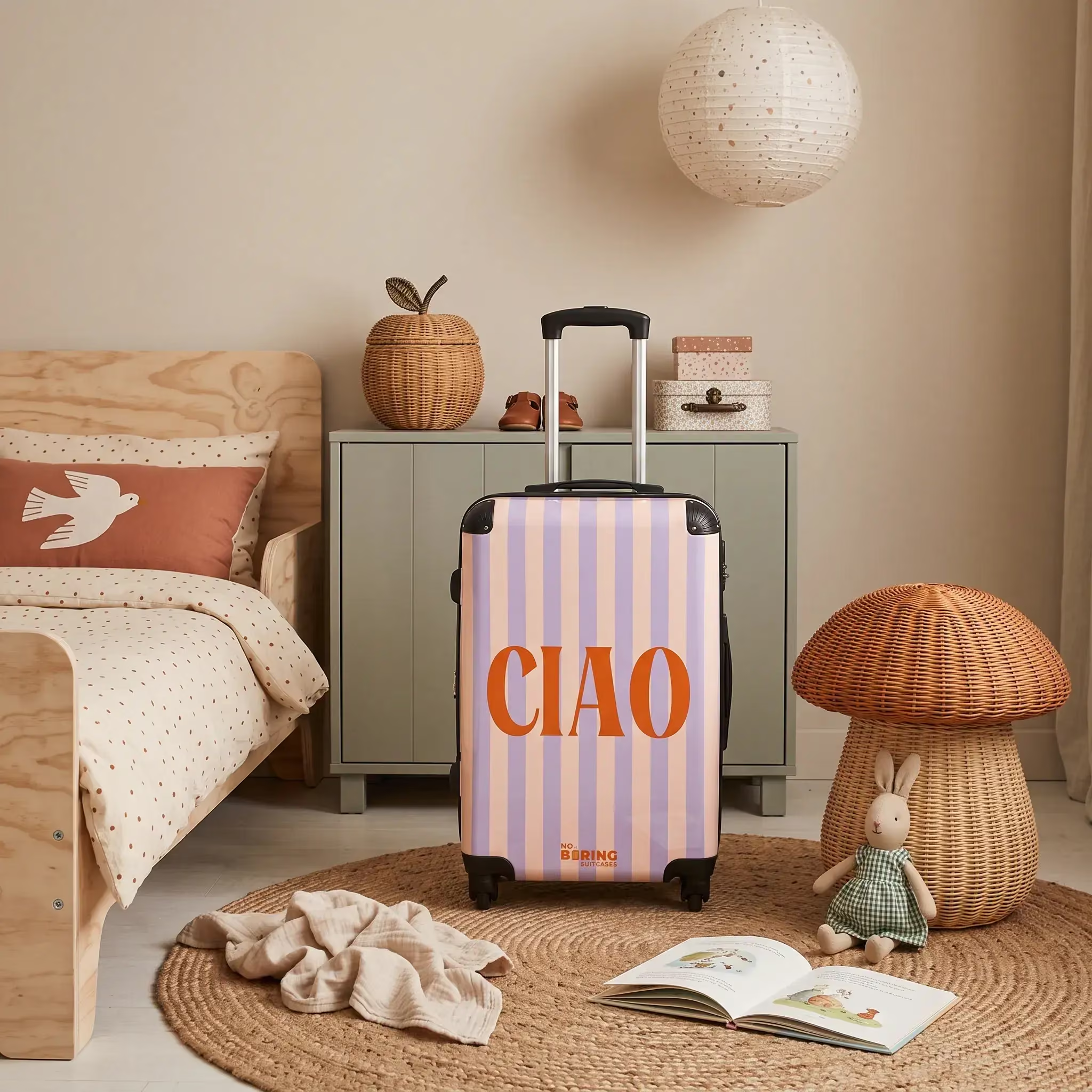
1. NoBoringSuitcases Cabin Suitcase (55 x 35 x 25 cm, 36 L)
If you want the best travel suitcase for frequent flying, cabin size is where wheel performance gets tested the hardest: tight aisles, jet bridges, and quick turns through terminals. The NoBoringSuitcases cabin suitcase measures 55 x 35 x 25 cm with a 36 L capacity and weighs about 2.6 kg empty, which keeps it manageable when you have to lift it into overhead lockers. The shell uses high-quality polycarbonate, which tends to flex rather than crack when it takes a knock.
On cobblestones and rough pavements, four 360-degree spinner wheels matter more than most people expect. A stable wheelbase reduces wobble when you’re walking fast and stops the suitcase tipping when you hit a kerb cut at an angle. Inside, the layout is built for organisation, so you waste less time repacking at security or moving items around to balance the load. If you want to browse similar sizes and designs, start with Cabin Suitcases.
- Durability: 9/10
- Weight: 9/10
- Price: 8/10
- Warranty: 7/10
Best for long-haul flights: Yes, if you prefer carry-on only and want smooth rolling in airports.

2. NoBoringSuitcases Medium Suitcase (67 x 43 x 25 cm, 72 L)
A medium suitcase often takes the worst of both worlds: you check it in (so it gets thrown around), then you still roll it across uneven streets to hotels and apartments. The NoBoringSuitcases medium suitcase is 67 x 43 x 25 cm with a 72 L capacity and weighs around 3.35 kg empty, which is a sensible balance for a checked bag that still needs to feel agile. Polycarbonate helps here because it absorbs impacts better than brittle plastics and usually shows scuffs rather than structural damage.
Wheel performance is the deciding factor when you land late and have to cross a city on foot, especially in places with older paving. Four 360-degree wheels give you options: pull it behind you on rough sections, then switch to pushing it beside you in smoother indoor spaces. The organised interior also helps you keep heavy items low, which improves stability and reduces wheel strain. For a quick overview of the full range of designs and sizes, check All suitcases.
- Durability: 9/10
- Weight: 8/10
- Price: 8/10
- Warranty: 7/10
Best for long-haul flights: Yes, for trips of about 7 to 14 days where you check a bag but still want easy manoeuvring.


3. NoBoringSuitcases Large Suitcase (77 x 51.5 x 28 cm, 98 L)
For long-haul trips, the best travel suitcase is often the one that survives baggage handling without wheel damage or shell cracks. The NoBoringSuitcases large suitcase comes in at 77 x 51.5 x 28 cm with a 98 L capacity and weighs around 4.75 kg empty. That weight is realistic for a large hard-shell that still aims to stay light enough to keep you within airline limits once packed.
Large suitcases expose weak wheels quickly because people tend to overpack, increasing rolling resistance and side-load on the axles. A four-wheel 360-degree setup improves control when you’re navigating long corridors and moving walkways, and it helps when you need to rotate the case in place at check-in queues. If you mainly travel with checked luggage and want a suitcase that’s easy to spot on the carousel thanks to distinctive designs, browse Large suitcases.
- Durability: 9/10
- Weight: 7/10
- Price: 8/10
- Warranty: 7/10
Best for long-haul flights: Yes, especially for 2+ week trips or multi-climate packing where you need the 98 L space

4. NoBoringSuitcases Kids Suitcase Compact (31 x 19 x 48 cm, 28 L)
A kids suitcase has a different durability challenge: it gets dragged sideways, bumped into walls, and occasionally used as a seat while waiting at the gate. The compact NoBoringSuitcases kids suitcase is 31 x 19 x 48 cm, weighs about 1.6 kg, and holds 28 L, which is plenty for a child’s clothes, snacks, and a couple of activities. It rolls on two wheels that light up automatically via a dynamo with LEDs, so there are no batteries, no charging, and no airline restrictions around electronics.
Two-wheel designs can outperform spinners on kerbs and rough ground because the wheels are often larger and sit slightly recessed. That matters when you’re crossing cobblestones or pulling the case up a ramp to a holiday flat. Colour options like black, blue, and pink, plus designs ranging from animals and flowers to personalised versions, make it easier to keep track of the case in busy terminals. For design options, see Kids suitcases.
- Durability: 8/10
- Weight: 10/10
- Price: 8/10
- Warranty: 7/10
Best for long-haul flights: Yes, as a child’s own roller for airport walking and gate waits.

5. NoBoringSuitcases Kids Suitcase Cabin Size (55 x 35 x 25 cm)
If your child needs more space or you want a matching family set, a cabin-size kids suitcase makes sense for school-holiday travel. This option comes in the same 55 x 35 x 25 cm cabin dimensions, which helps when you want consistent packing cubes and easier stacking in the car boot. Depending on the design, it’s made from polycarbonate or transparent PVC and polyester with a zip closure, so you can choose the look and feel that fits your trip.
Wheel performance on a larger kids case is about stability: a child may not pull in a straight line, and the case needs to cope without tipping constantly. A hard-shell polycarbonate version is a strong choice when you expect rough handling on trains and flights. If you like the idea of a suitcase that’s instantly recognisable, personalised designs reduce mix-ups at security and boarding gates.
- Durability: 8/10
- Weight: 8/10
- Price: 8/10
- Warranty: 7/10
Best for long-haul flights: Yes, for families who want kids to carry their own essentials on board.

6. Polycarbonate hard-shell spinner suitcase (premium)
Polycarbonate is still the standout material for travellers who care about durability without carrying unnecessary weight. In real use, polycarbonate tends to flex when it gets squeezed in overhead bins or slammed on a baggage belt, which reduces the chance of cracks compared with cheaper rigid plastics. A premium spinner setup should roll smoothly even when the case is fully packed, and it should track straight when pulled at speed through a terminal.
If you regularly deal with cobblestone streets, focus on wheel quality and wheel housing. Wheels that sit slightly protected reduce damage when you clip kerbs, and a stable handle reduces the side-to-side wobble that wears wheels out early. For travellers who want a hard-shell that also looks personal, a custom print can be more practical than a generic black case because you spot it instantly.
- Durability: 9/10
- Weight: 8/10
- Price: 7/10
- Warranty: 7/10
Best for long-haul flights: Yes, especially if you want a hard-shell that shrugs off dents and scuffs.

7. Aluminium frame hard-shell suitcase (heavy-duty)
If your suitcase gets abused by frequent checking, an aluminium frame case is built for punishment. It resists crushing and protects fragile items well, which is useful for work travel with equipment or for trips where you carry gifts home. The trade-off is weight: aluminium cases often eat into your packing allowance before you’ve added a single outfit.
Wheel performance can be excellent on smooth floors, but the extra weight increases load on the wheels on rough surfaces. On cobblestones, you’ll feel that mass when you have to lift the case over gaps or up steps. Choose this style when protection matters more than convenience and you don’t mind a heavier carry into taxis and hotel lobbies.
- Durability: 10/10
- Weight: 5/10
- Price: 5/10
- Warranty: 7/10
Best for long-haul flights: Yes, when you prioritise maximum protection over weight.


8. Soft-sided expandable suitcase (best for overpackers)
A soft-sided expandable suitcase wins when you need flexibility, like bringing back shopping or packing bulky coats for a winter city break. The fabric can handle surface scrapes better than a glossy shell, and external pockets help with quick access to chargers, a rain jacket, or travel documents. The weak point is impact protection: soft sides won’t shield fragile items as well when baggage handlers stack heavy cases on top.
Wheel performance varies widely in this category, so check for sturdy wheel mounts and a handle that doesn’t twist. Overpacking an expandable case often shifts the centre of gravity, which makes spinners wobble on uneven ground. If you walk a lot on rough pavements, a soft case with robust wheels and a firm base panel will feel far less frustrating.
- Durability: 7/10
- Weight: 8/10
- Price: 8/10
- Warranty: 6/10
Best for long-haul flights: Sometimes, mainly if you need expandability and pack non-fragile items.

9. Two-wheel roller suitcase (best for stairs and kerbs)
Two-wheel rollers look old-school, but they still shine in real street conditions. Larger wheels roll over cracks, kerbs, and cobbles more confidently than many small spinner wheels, and the suitcase stays angled, which reduces snagging. If your trips involve lots of stairs, train platforms, or older cities with uneven paving, this style can feel more durable simply because the wheels take fewer sideways hits.
The downside is manoeuvrability indoors. In tight airport queues, you can’t pivot in place as easily as you can with a four-wheel spinner, so you end up pulling and turning with more space. For travellers who prioritise wheel survival over effortless gliding, two wheels remain a strong, practical choice.
- Durability: 8/10
- Weight: 8/10
- Price: 8/10
- Warranty: 6/10
Best for long-haul flights: Yes, if you expect lots of rough ground at your destination.

10. Hybrid hard-soft suitcase (best for mixed travel)
Hybrid suitcases combine a more rigid shell structure with softer sections or pockets, aiming to balance protection and convenience. They can work well for mixed itineraries where you fly, take trains, and walk to accommodation, because you get better structure than a full soft case but a bit more give than a full hard-shell. In practice, the quality of the seams, zips, and corner protection determines whether the hybrid concept actually lasts.
Wheel performance is often decent, but hybrids can be slightly top-heavy if the front pockets encourage you to load weight high. Pack heavier items low and close to the wheelbase to keep the case stable on cobblestones. If you like the idea of a suitcase that’s both personal and easy to identify, custom designs are a simple way to reduce the chance of grabbing the wrong case on a carousel.
- Durability: 8/10
- Weight: 7/10
- Price: 7/10
- Warranty: 7/10
Best for long-haul flights: Yes, for travellers who want pockets plus better protection than fabric alone.


Ready to pick a suitcase that survives real travel?
Where durability and wheel performance really land in practice comes down to this:
- Choose polycarbonate if you want a hard-shell that stays light and handles rough baggage belts without cracking easily.
- Prioritise wheel stability if you’ll roll over cobblestones, kerbs, and long airport corridors, not just smooth hotel floors.
- Match size to the trip: 36 L cabin for carry-on travel, 72 L medium for week-long trips, and 98 L large for long-haul packing.
- Use personal designs or name/initial customisation to spot your suitcase instantly and avoid carousel mix-ups.
NoBoringSuitcases offers cabin, medium, large, and kids options with organised interiors, distinctive designs, and optional TSA combination locks. For a truly one-of-a-kind case, explore Suitcase own photo and upload an image for a professional print check.

For international travel, pick a suitcase with strong wheels, a durable shell, and a size that matches your airline and trip length. A 55 x 35 x 25 cm cabin case suits carry-on-only travel, while a 72 L or 98 L checked case works better for longer itineraries. If you’ll walk on rough streets, wheel quality matters as much as shell strength.
Suitcases tend to last longest when the shell absorbs impact and the wheels resist side-load damage. Polycarbonate hard-shell cases usually hold up well because they flex rather than crack, and a stable wheelbase reduces stress during rolling. Longevity also improves when you avoid overpacking and keep heavy items low.
Hard suitcases protect better against impacts and crushing, which is useful for flights and fragile items. Soft suitcases can be more forgiving for squeezing into tight spaces and often offer external pockets and expandability. If your travel includes cobblestones and frequent checking, a hard-shell with reliable wheels is often the safer bet.
Illuminated wheels can be an issue if they rely on batteries or electronics that trigger airline restrictions. Dynamo-powered LED wheels avoid that because they generate light through motion without batteries. That makes them simpler for travel and maintenance.
A TSA lock is not mandatory, but it helps when you check luggage on routes where security may open bags for inspection. A TSA-compatible combination lock allows authorised access without forcing the lock. If you travel frequently and check bags often, it’s a practical upgrade.