
Can you put aerosols in checked luggage?


Can you put aerosols in checked luggage? What to know
Yes, in many cases you can put aerosols in checked luggage, especially when they are everyday toiletry products, but it depends on what the aerosol contains and your airline's rules. People usually ask, "Can you put aerosols in checked luggage?" because they do not want items that are not permitted at the airport or because they have connecting flights and do not want surprises at security. As a practical starting point, pack aerosol products in a suitcase that gives you space and structure, so caps stay on and there is no release of the contents during handling. If you want a simple setup, our polycarbonate cases are built to travel: the 77 x 51.5 x 28 cm Large Suitcase (98 L) is ideal for checked baggage, while the 67 x 43 x 25 cm Medium Case (72 L) works well when your checked baggage allowance is smaller. For sizes and styles across the range, you can see all suitcases.
Aerosol vs dangerous goods: what really matters
What matters is not only that it is an aerosol but also whether it is flammable, how it is classified under dangerous goods regulations, and whether it is a non-dangerous good, like common personal care spray. Aerosols and gels often cause confusion because people mix up cabin baggage liquid limits with checked baggage rules. In checked baggage, the main concern is dangerous goods such as lithium items and flammable sprays, not the 100 ml liquid rule that affects carry-on baggage. If an aerosol is clearly a toiletry (for example, deodorant), it is often allowed in checked baggage, but if it is a paint, solvent, or other product containing dangerous goods, it may be a restricted item or even strictly prohibited.
To reduce problems, keep the product label readable and pack it so it cannot accidentally discharge. A simple method is to place the aerosol in a plastic bag, then position it in the middle of your suitcase between soft clothing so it is protected from impact. If you are travelling on international flights, especially outside the UK, your airline may apply International Air Transport Association guidance more strictly, and UK airports can also be more cautious during peak travel periods. When in doubt, treat it like a potentially restricted item and check your airline policy before you go to the airport.
Checked or cabin baggage: where do aerosols belong?
If your aerosol is permitted, it usually makes more sense to put it in checked baggage rather than in cabin baggage, because airport liquid screening is stricter for items carried in the cabin. In carry-on baggage, aerosols and gels are typically limited by liquid volume rules, and airport security staff may ask you to remove them and place them in a plastic bag. In checked baggage, you avoid that checkpoint, but you still need to pack so the valve does not get pressed and cause a release of the contents. If you are unsure whether something should be in carry-on or checked baggage, assume the stricter route and verify before travel, especially with connecting flights where different airports may interpret rules differently.
For travellers who want to keep essentials close, our Cabin Suitcase is 55 x 35 x 25 cm with 36 L capacity and weighs about 2.6 kg, and this size is accepted by almost every airline as carry-on luggage. That makes it a good choice for personal items you want to carry in your carry-on baggage, while your larger sprays can go in the hold. You can view the cabin option here: cabin suitcase. Keeping the split clear helps you move faster through the airport and reduces the chance that prohibited items end up in the wrong bag.

Popular suitcases
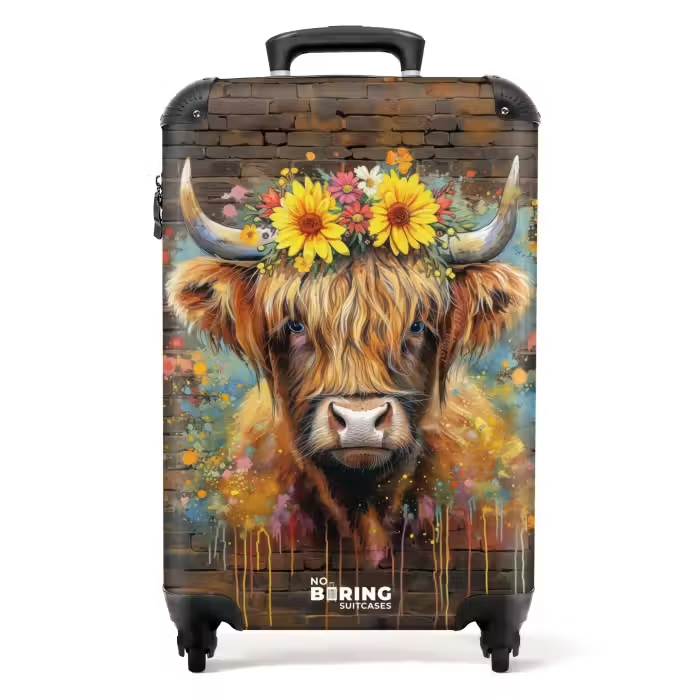
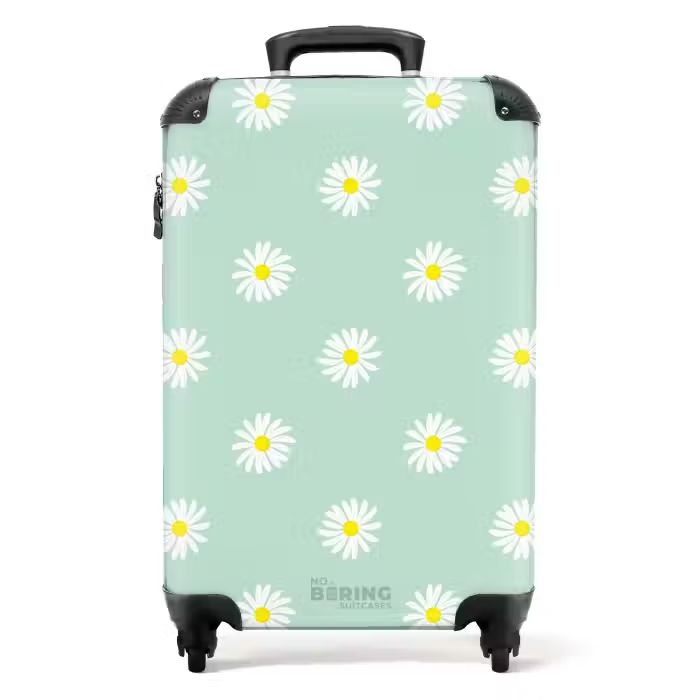
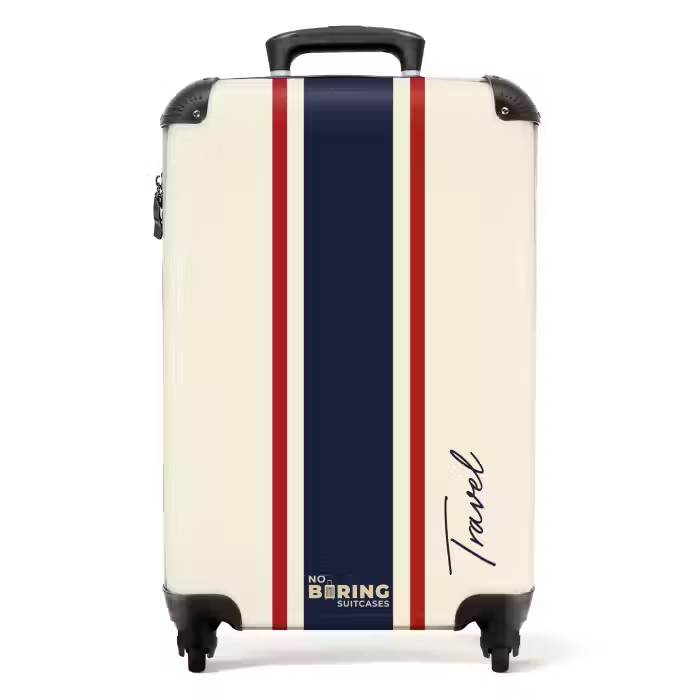
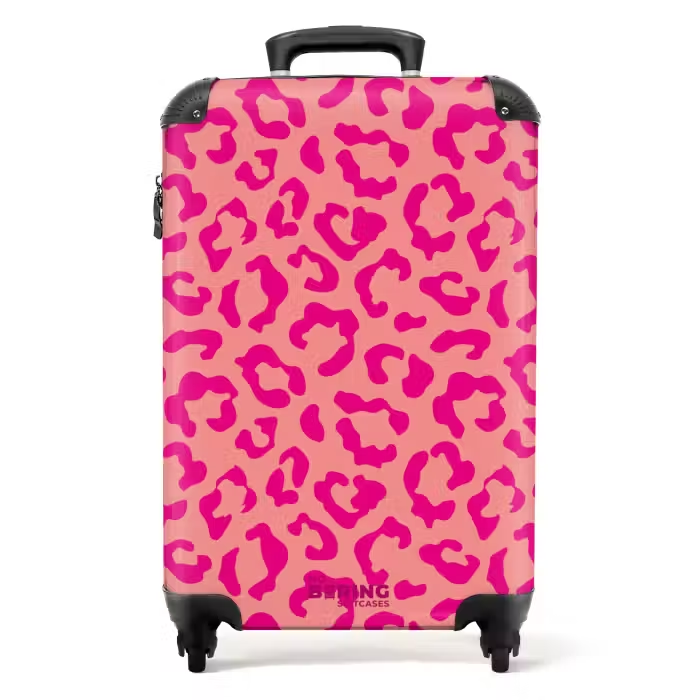
Finally, hand luggage sleek enough to feature in your pre-flight story
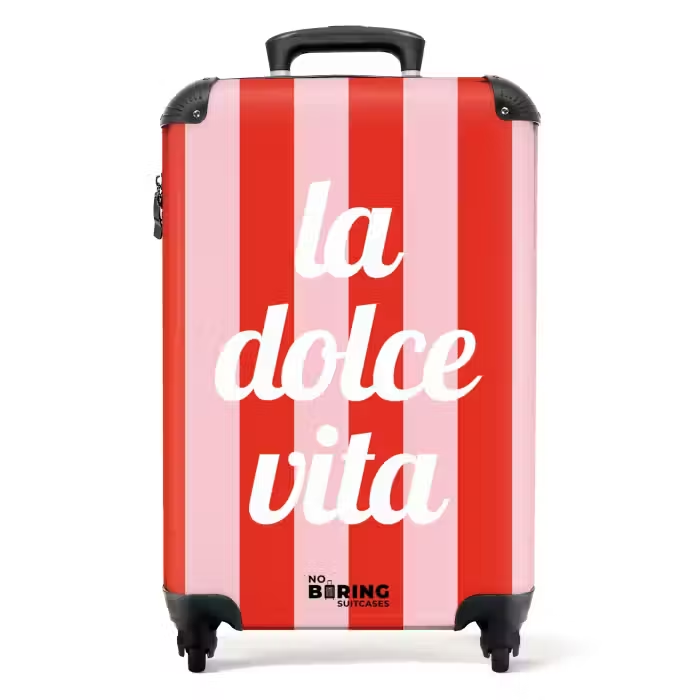
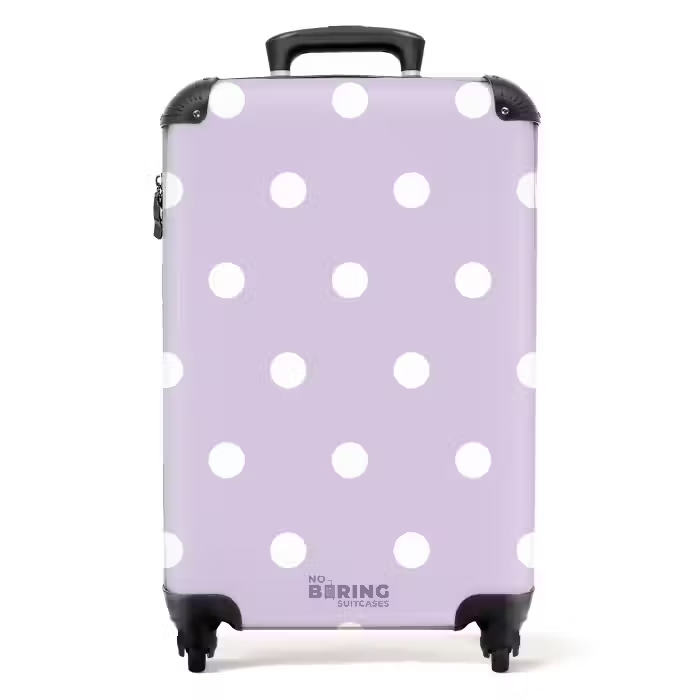

Pack aerosols: the smart way to prevent liquid leaks
Start by checking that every aerosol has a cap and that the nozzle cannot be pressed by surrounding items, because it must be protected against unintentional discharge. Put each aerosol in a plastic bag and keep it sealed or gathered and closed, and if you want extra security, it can be closed with an elastic band around the neck of the bag. Place aerosols upright where possible, and cushion them with clothing so they are securely fastened and wrapped to avoid punctures. Also remember that the top of the bag must be arranged so heavy items cannot shift onto the can during baggage handling.
Our polycarbonate suitcases help here because they are sturdy and light, and the interiors are organised so you can separate liquids, toiletry items, and clothing. The medium suitcase (67 x 43 x 25 cm, 72 L, about 3.35 kg) is a good “one week” checked baggage option because it has enough volume to create a protected zone around sprays without overpacking. The large suitcase (77 x 51.5 x 28 cm, 98 L, about 4.75 kg) is ideal when you want to distribute weight and reduce pressure on any one item. For extra peace of mind, you can add an optional TSA combination lock so your bag can be inspected without damage, which is useful when you put items in the hold that might be checked by security.
Restricted items: lighters, batteries, and electronic devices
People often pack aerosols next to a lighter or electronic items, but those categories have their own rules and can trigger a bag check. A lighter may be restricted, and some lighters with fuel requirements must be completely drained of liquid fuel, with time allowed for any residual fuel to evaporate, because this is part of the safety logic. Some items must not be carried aboard an aircraft at all, and others are only accepted if steps are taken to nullify the danger. Ammunition with explosive or incendiary projectiles is a separate high-risk prohibited items category that you should never mix into normal packing assumptions.
For an electronic device, the key issue is lithium batteries and lithium-ion batteries, including a power bank. In most cases, portable electronic devices and personal electronic devices with lithium batteries are expected to be carried in the cabin, and some items must be carried rather than placed in checked baggage. In many airline policies, power banks are prohibited from checked bags, and power banks are prohibited from use during certain phases of flight, so keep them in carry-on luggage and prevent activation. If you travel with smart baggage or smart luggage incorporating dangerous goods, the battery may need to be removable, and powered items should have measures taken to prevent unintentional activation. If something is subject to a safety recall, do not travel with it, because it may be treated as containing dangerous goods.
Family travel: what goes onboard vs checked baggage
When you travel as a family, it helps to decide what is allowed onboard for comfort and what should go in checked baggage to avoid delays. Our Kids Suitcases come in a compact 31 x 19 x 48 cm size (1.6 kg, 28 L) and a cabin size 55 x 35 x 25 cm, made of polycarbonate or transparent PVC and polyester with a zip. The compact kids case has two wheels that light up using a dynamo with LED, so there are no batteries or electronics, which means there are no extra airline restrictions tied to lithium batteries. That makes it easier to keep snacks, a spare outfit, and small personal items in the cabin without worrying about an electronic device classification.
For sprays like sunscreen aerosol or hair products, it is usually simpler to put them in checked baggage while keeping essentials in carry-on baggage for the flight. If a child uses a medical mobility aid or needs specific liquid supplies, check airline rules early so you know what can be carried aboard an aircraft and what must be carried in the cabin. Because the kids' case is designed around simple mobility and no battery pack, it stays straightforward at the airport. You can explore the range here: kids suitcases.

Choose the right suitcase for safer packing
Choosing the right suitcase makes aerosol packing easier because space and structure reduce pressure, movement, and accidental valve contact. For checked baggage, our large polycarbonate suitcase (77 x 51.5 x 28 cm, 98 L) is the best fit when you want to spread items out and keep sprays away from heavy shoes or hard objects. If you prefer a smaller option that still works well for checked baggage, the medium suitcase (67 x 43 x 25 cm, 72 L) balances capacity with an easy-to-handle weight of about 3.35 kg. Both options roll smoothly on four 360-degree wheels, which helps when you are moving quickly through the airport with multiple bags.
If you want your bag to be instantly recognisable, you can order it with a name and initials, choose from many unique designs, or even print your own photo with professional photo checking for sharp, colour-accurate results. That is especially helpful on busy baggage belts, where many bags look the same and you want to spot yours fast after a long flight. If you are interested in personalising, you can view suitcase with your own photo. A recognisable case also reduces mix-ups when you put luggage in the hold and collect it later.

Ready to travel? Grab your aerosol-safe suitcase
If you regularly travel with aerosol toiletry products, choosing a sturdy, lightweight polycarbonate suitcase makes packing safer and simpler. Pick the 98 L option when you want maximum space for checked baggage, or go medium when you want a balanced size that still protects your liquids and sprays. Add an optional TSA combination lock, choose a standout design, and consider personalisation so your bag is easy to identify after the flight. Browse the 98 L option here: large suitcase, and pack with confidence knowing your aerosols are secure.
Often yes for typical toiletry aerosol products, but rules can vary by airline and destination. For international flights and routes outside the UK, always verify the specific restrictions before you travel.
Usually no, because power banks are commonly required to be carried in the cabin due to lithium batteries. Keep the power bank in carry-on baggage and pack aerosols separately in checked baggage.
Airport security staff may open your bag, remove the item, or ask you to repack, depending on the risk category. If the item is strictly prohibited, it can be confiscated and you may lose time at the airport.
It is not always required, but it is a smart way to prevent a mess if there is a leak or release of the contents. A plastic bag also helps keep toiletry spills away from clothing and documents.