
How Are Suitcases Measured?

How are suitcases measured for airline and carry-on size?
If you are wondering how suitcases are measured, the key is that an airline usually cares about the outer luggage dimensions, not the inside space. That means the suitcase dimensions are taken on the outside at the widest point, and you typically need to include wheels and handles because they affect whether your luggage fits a sizer. When people search how suitcases are measured, they are often trying to avoid size restrictions at the gate and keep their carry-on or checked luggage within size limits. Our range of suitcases is designed around real travel needs, with clear sizes: a cabin-friendly 55 x 35 x 25 cm option, plus medium and larger suitcases for longer trips, and two kids' options.
Airlines measure in slightly different ways, so the safest approach is to measure your luggage at home and then check with your airline. For example, some carry-on rules are stated in inches, such as 22 x 14 x 9, and you may also see it written as '22 x 14 x 9 inches' or '22 x 14 x 9 inches' in a size guide. In centimetres, you might see a reference like 56 x 36 x 23, and you can compare that to your suitcase size before you travel. This is why understanding the size of your suitcase is so practical, especially if you want luggage that fits the overhead bin without stress.
Measure a suitcase: what counts as the full dimension?
Answer first: the suitcase dimension that matters is the full exterior measurement, including any protruding parts. To measure a suitcase correctly, place it upright and use a measuring tape to capture the height, width, and depth of your suitcase at the widest point. Many travellers forget to include wheels, but airlines measure from the wheels to the top, so you should include wheels and handles in your measurements. If you want to measure luggage once and be confident, measure from the bottom of the wheels to the highest point on the handle housing, then measure the width and the depth across the bulkiest area.
This matters for both carry-on and checked baggage, because a bag that is slightly too big can be treated as oversized and may trigger baggage fees depending on the airline. Some airlines use linear dimensions, which means adding height + width + depth, and a common checked baggage cap is 62 linear inches. That is why luggage size restrictions and airline luggage size restrictions are not just theory; they affect what happens at the airport. If you travel with a cabin suitcase like our 55 x 35 x 25 cm model, you are working with a popular suitcase size that is accepted by almost every airline as carry-on, which reduces surprises at boarding.
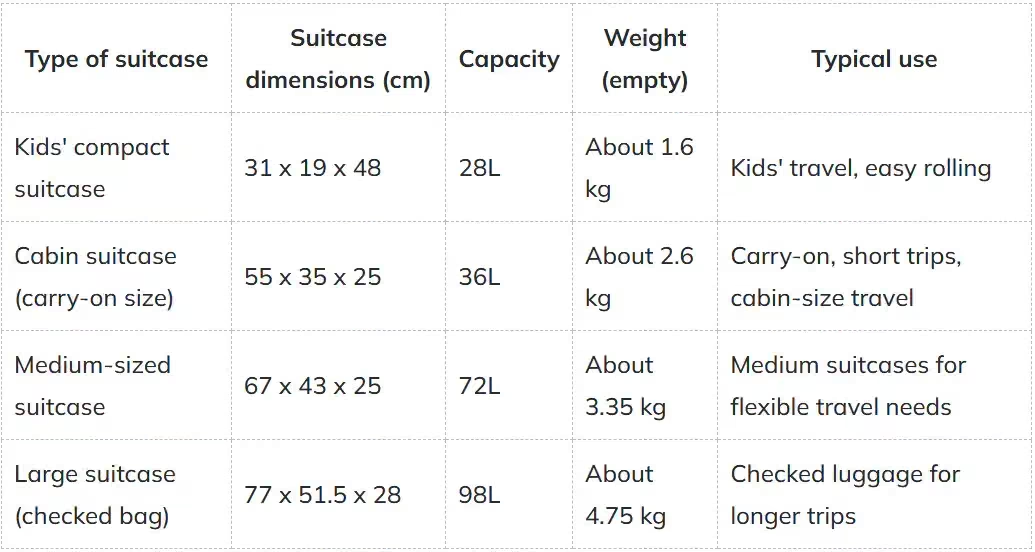
Luggage size chart for our suitcase sizes
Below is a practical size chart for our different sizes, so you can match luggage size to your trip and airline size rules. These are the suitcase dimensions you would use when airlines measure, and they are the numbers you should compare to size requirements and hand luggage restrictions. For carry-on luggage, many travellers also plan around a personal item, so you can keep essentials separate even when your cabin bag is in the overhead bin. Use this luggage size guide as a quick reference before you pack.
All our main adult luggage options are made from high-quality polycarbonate, designed to be sturdy and light, and built for smooth mobility with four wheels that rotate 360 degrees. The kids' compact option has two wheels that light up automatically via a dynamo with LED, so there are no batteries, no electronics, and no airline limitations tied to power sources. You can also choose an optional TSA combination lock for safer travel, and you can order with or without a name and initials. Because the luggage is well organised inside, you can pack efficiently even when you are working within size guidelines and varying size rules across airlines like Ryanair.
Carry-on luggage vs checked luggage: find your ideal size
The simplest way to choose is to start with your travel needs and then map them to luggage allowances and size and weight restrictions. If you take short trips, a carry-on suitcase is often the perfect size because it avoids the baggage carousel and keeps you moving fast through the airport. Our cabin suitcase at 55 x 35 x 25 cm is designed as cabin luggage and is accepted as carry-on by nearly every airline, which is helpful when hand luggage size rules feel confusing. If you are also allowed a personal item, you can keep valuables and documents close while your cabin bag goes overhead.
For longer trips, checked luggage becomes more practical, especially if you want a suitcase with a capacity like 98L and room for bulkier clothing. Our large suitcase is built for checked baggage and is still lightweight for its category, but remember that a weight limit can matter as much as the suitcase size. A common scenario is a 23 kg suitcase weight target, where you want enough volume without exceeding the weight allowance once packed. If you are unsure, start with the medium-sized suitcase at 72L, which often hits the sweet spot between space and easy handling.

Airline size restrictions: how airlines measure your luggage
Answer first: airlines measure the outside of your luggage, and they often use a sizing frame, so you should include wheels and handles in every measurement. This is where people get caught out, because the shell may fit, but the wheels or handle housing can push you over the maximum size. When you measure your suitcase, use a measuring tape and record the height, then measure the width, then the depth of your suitcase, always at the widest point. If your suitcase has an expandable section, measure it in the expanded state too, because that is the real bag size you may present at the gate.
Size limits can be shown in inches or centimetres, and you may see references like 22 x 14 x 9, x 8 inches, or even a smaller personal item size such as x 20 cm or x 23 cm in certain policies. Some travellers also come across examples like x 36 x 23 cm or 56 x 36 x 23 when comparing to cabin rules, which helps translate between systems. Because airline luggage and airline size requirements can change depending on the airline, the safest habit is to check with your airline before each trip. That small step helps you avoid last-minute checked bag charges, unexpected checked bag handling, or being forced to check your carry-on at the gate.
Quick measuring luggage dimensions for your suitcase
This checklist helps you measure luggage consistently, especially if you are comparing luggage dimensions to airline luggage size restrictions. It also helps if you are packing for a route where airlines measure strictly at boarding. Use it at home, then keep the numbers in your notes for future trips. It is a simple routine, but it prevents most size problems.
- Measure from the bottom of the wheels to the top of the suitcase, because airlines measure from the wheels to the top.
- Measure the width at the widest point and do not forget corner curves or bulges.
- Measure the depth of your suitcase across the thickest area, including pockets and any expandable section.
- Confirm you include wheels and handles, then compare it to carry-on size or checked luggage rules.
Why our cabin suitcase makes carry-on travel easy
Our cabin suitcase is 55 x 35 x 25 cm with a 36L capacity, made from polycarbonate, and weighs about 2.6 kg empty, so it is easy to lift into the overhead bin. This is a standard size that is accepted as carry-on by almost every airline, which reduces the stress of hand luggage restrictions. It also rolls smoothly on four wheels with 360-degree rotation, so you can move through terminals quickly even when the cabin is crowded. If you want to browse options built around cabin travel, you can view our cabin suitcases collection.

Choosing the right suitcase size for every trip
Picking the right suitcase size is easier when you think in scenarios: a weekend, one week, two weeks, or family travel with kids. Our medium-sized suitcase is 67 x 43 x 25 cm with a 72L capacity and weighs about 3.35 kg empty, giving a practical balance of space and handling for many travellers. For bigger packing lists, the large suitcase is 77 x 51.5 x 28 cm with a 98L capacity and weighs about 4.75 kg empty, which is ideal when you want larger suitcases that still feel stable and mobile. If you are shopping specifically for checked travel, you can explore our large suitcases selection.
For families, kids' luggage can make travel smoother because children can roll their own suitcase and recognise it instantly. Our kids' range includes a compact 31 x 19 x 48 cm option and a cabin format 55 x 35 x 25 cm option, made from polycarbonate or from transparent PVC and polyester with a zip. The compact kids' suitcase has two wheels that light up automatically using a dynamo with LED, meaning no batteries and no digital luggage components that could cause restrictions. If you want to see the designs, colours (black, blue, and pink), and personalisation options, visit our kids suitcases page.

Make your luggage easy to spot with personalisation
Personalisation helps you find your suitcase quickly without affecting the luggage dimensions that airlines measure. You can order our suitcases with or without a name and initials, and you can choose from many unique designs so your luggage stands out at baggage claim. If you want something truly personal, you can even create a suitcase own photo design, with professional photo checking for sharp, colour-accurate printing. That makes it easier to identify your luggage in a busy cabin or on the belt, while keeping the same suitcase size and the same measured dimensions on the outside.
Personalisation also helps reduce mix-ups, especially when many travellers carry the same-looking cabin bag. It is a practical upgrade that does not change size requirements, because the shell size stays the same and there is no added bulk. The best approach is to personalise first, then measure your luggage once, and keep those numbers for every future booking. If you want to create your own image print, you can start with suitcase own photo and keep your travel look consistent across trips.
Ready to travel with luggage that fits airline requirements?
Choosing the right luggage starts with understanding how airlines measure outer dimensions, always accounting for protruding wheels, handles, and pocket bulges to avoid unexpected gate fees. Whether you need a standard cabin-friendly size (55 x 35 x 25 cm) to breeze through boarding, a medium or large suitcase (up to 98L) for extended trips, or a battery-free LED-dynamo kids' bag, selecting the ideal format ensures you stay well within airline restrictions.
Combine the exact size you need with maximum mobility, sturdy polycarbonate materials, optional TSA combination locks, and unique custom designs. By adding custom names, initials, or high-quality photo prints, your suitcase remains easy to pack and instant to spot on the carousel. Explore our collection today, measure your luggage once with confidence, and travel hassle-free on every journey.

Measure at the widest point, not the flat panel, and keep the measuring tape straight from edge to edge. Curves still count towards the maximum size, so record the largest dimension you can find.
Yes, airlines sometimes measure carry-on using a sizing frame, especially on full flights or strict routes. That is why you should include wheels and handles and stay within the stated size limits.
A personal item is usually a smaller bag that fits under the seat, while a cabin bag goes in the overhead bin. Always check your airline because personal item rules and size limits vary.
Often, yes, because staying within size restrictions and weight allowances reduces the risk of extra charges. If your bag is oversized or too heavy, baggage fees are more likely, depending on the airline.