
Can You Take Food in Your Suitcase?
Can you take food in your suitcase when traveling by air?
Can you take food in your suitcase when you fly, and does it matter whether it is in hand luggage or hold luggage? In most cases, food is allowed, but airport rules focus heavily on liquids, gels, aerosols, and other restricted items. If you are trying to decide what to pack and where, our suitcases make it easier to stay organized and get through the airport without stress. You can also plan your packing more efficiently by checking how to pack a suitcase before you travel.
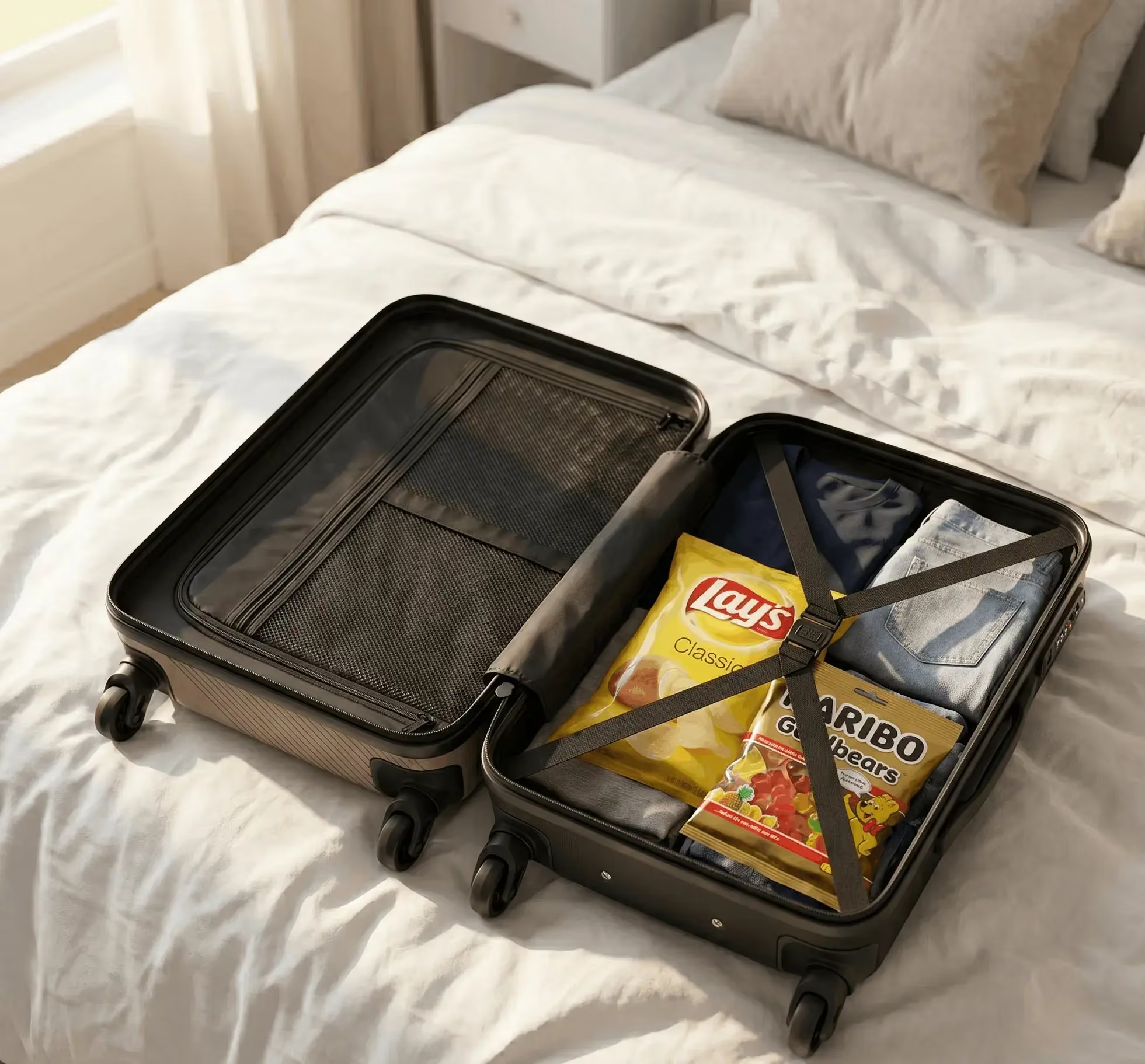
What food can you bring through the checkpoint?
Yes, you can usually take solid food through airport security in hand luggage, but liquids are where most people get stuck. Liquid-style foods like soups, sauces, yogurt, and spreads can be treated as liquids or gels, and that affects what is allowed through the checkpoint. At many airports, liquids in your hand luggage must meet local limits and be placed in a plastic bag, and you may need to remove anything that requires separate inspection. Rules can vary by airport, so getting through security is easiest when you pack with the strictest common standard in mind.
Our 55 × 35 × 25 cm cabin bag-style suitcase is built for exactly this kind of airport routine. The hard polycarbonate shell protects food you do not want crushed, while the organized interior helps you separate snacks from toiletries so security screening for your hand luggage stays simple. When you pass through security, officers may ask for additional screening if something looks unclear in the X-ray machine. If you want to double-check your cabin size planning before you arrive at a UK airport, see what size is a cabin suitcase.
Food and powders and restricted items in luggage
When people ask if they are allowed to take food, they are often really asking about food and powders and what counts as prohibited items. Powdered foods, spices, protein powder, and similar items can trigger extra checks, and you might need to open containers for security screening. It is not that you cannot take them, but you should expect questions from staff at the airport if the packaging is bulky, unlabelled, or hard to identify. Keeping items in the original packaging can help show what they are, which reduces delays at the security checkpoint.
For the smoothest experience, group your food items by type and keep them easy to reach. That way, if something needs to be screened separately, you can remove it quickly and repack without holding up the line. This is also where a tough case matters, because powder tubs and snack boxes are less likely to crack or burst in your luggage. Our polycarbonate suitcases are designed to be sturdy and lightweight, so your baggage stays protected while you move through the airport.
Which suitcase works best for taking food?
The best choice depends on what you need to bring food for and how quickly you want access to it. If you need snacks during the flight, pack them in carry-on luggage so they are kept in the cabin and available on the plane. If you are packing bulkier food or you do not need it until you arrive, a checked bag can be a better fit because you can pack more without worrying about liquids in your hand luggage. Either way, you can carry food safely when your case is structured and protective.
Our hand luggage case (55 × 35 × 25 cm, 36 liters) is ideal for sandwiches, snacks, and anything you want to reach after the security area. Our medium suitcase (67 × 43 × 25 cm) is a strong option for checked baggage, especially if you want to put larger packs of food in the hold that might be awkward to manage at the airport security line. If you are unsure how much space you will need for a longer trip, you can also read how to pack a suitcase and build a simple packing plan before you leave. With both options, the built-in TSA lock helps protect your luggage while you travel, particularly if the bag is opened for inspection.
Airport security screening tips for taking liquids, gels, and aerosol items with food
If your food includes liquid or gel products, pack these items so they are easy to remove. Many airports ask you to place liquids in your hand luggage into a clear plastic bag, and some travellers use a 20 cm × 20 cm bag as a practical reference size. Security staff may ask you to take out liquids, gels, and aerosols, and then the items go through security in a separate tray. If something looks unclear, airport security staff can request additional screening, which is normal and not necessarily a problem.
It also helps to avoid mixing food with toiletries, because it can slow down the process when you go through security. Keep any aerosol deodorant or similar products away from snacks, and do not pack messy items that could leak. This is where our organised interiors and tough shells help, because you can pack these items in separate sections and reduce the risk of spills. If you ever need to adjust your lock after a trip, use how to reset suitcase lock to get back on track quickly.
Family travel: baby food, kids' suitcases, and bringing food outside the UK
If you travel with children, baby food is often the biggest worry at the airport, especially when it is a liquid or purée. In many cases, you are allowed to take baby food in reasonable quantities, but you should be ready to show it to security officers and follow instructions from staff at the airport. Because rules can vary by airport and can change outside the UK, it is smart to keep baby supplies easy to access and clearly separated. This reduces stress when you need to carry essentials through the security checkpoint.
Our kids' suitcases are built to make family travel smoother. The small kids' case (31 × 19 × 48 cm) and the hand luggage kids' case (55 × 35 × 25 cm) are made from high-quality polycarbonate, while the 46 × 31 × 19 cm kids' case uses transparent PVC and polyester. The kids' case has two wheels with lights for visibility and fun, plus an adjustable pull handle and an extra carry handle, which helps when you are juggling snacks, documents, and getting through airport security. With more than 1,000 designs and personalisation options like a photo, name, or initials, it is also easier to spot your child's luggage quickly at busy terminals.
Choose a suitcase that makes packing food simple
If you want to take food in your luggage with less hassle, start with a suitcase that matches your trip length and how you plan to move through the airport. Pick our 55 × 35 × 25 cm polycarbonate hand luggage case for easy access after the checkpoint, choose the 67 × 43 × 25 cm medium case if you want to put more supplies in the hold, or go for one of our kids' suitcases to make family travel easier. With 360-degree wheels on the adult cases, TSA locks, lightweight materials, and the option to personalize from over 1,000 designs, you will travel with a case that is both practical and instantly recognizable. Choose your favorite design and personalize your suitcase today so your next airport trip feels organized from the first pack to the final arrival.
Yes, sandwiches are usually fine to take through security because they are solid food. If the filling includes a runny sauce that counts as a liquid or gel, you may be asked to follow the liquids rules at the security checkpoint.
Sometimes, yes, especially for dense items, food powders, or anything that looks unclear in the X-ray machine. Security staff may ask for additional screening, and you might need to open the container.
You cannot take large amounts of liquid-style foods through some checkpoints, and you will not be allowed to take them if they break local liquids rules. Prohibited items and dangerous goods are separate categories, so always follow airport guidance if you are unsure.
If you need it during the flight, pack it in carry-on luggage so it is kept in the cabin. If it is bulky and you do not need it until arrival, packing it in checked luggage can be easier.